How Much Does It Cost to Build a Legal ADU/ARU in Ontario? (Different Types)
It’s the question we get most – “How Much Does It Cost to Build a Legal ADU/ARU in Ontario?”
For many Ontario homeowners and real estate investors, building a legal Additional Residential Unit (ARU), Accessory Dwelling Unit (ADU), or secondary suite feels like the perfect plan. To add more living space, long-term rental income, flexible family housing, and a major property value boost, sign me up, right? RIGHT!
But when it comes to planning the project, most people run into the same problem –
“Why is it so hard to get a straight answer about ADU costs?”
The confusion on cost usually comes from one place – ADU pricing depends heavily on dozens of property specific factors and almost every homeowner underestimates certain steps, services, timelines, or code requirements.
In this article you will understand the major cost considerations for building additional suites on your property, and how Suite Builders can get you that answer fairly quickly and upfront before you even sign on the dotted line. You’ll learn about
- What drives the cost of an ADU
- Why ADU projects can often exceed early estimates if not approached correctly
- How Suite Builders eliminates the unknowns, miscommunications, and delays that drive costs up
- A realistic 2026 cost range for legal ADUs/ARUs of all types
Let’s start with what actually affects your budget.
The Real Cost Drivers Behind Every ADU Project
Before we get into numbers about how much does it cost to build a legal ADU/ARU in Ontario, it’s important to understand why costs vary so widely across Ontario. Even two backyard suites on the same street can require vastly different budgets depending on site, structure, and municipal requirements.
Here are the factors that matter most –
1. Unit Type (Basement, Attached, Conversion, Garden Suite)
Every ADU type comes with a different level of structural work
- Basement suites leverage the existing foundation and roof, so fewer materials are needed.
- Garage conversions often require structural reinforcement and full envelope upgrades.
- Attached additions require new foundation, exterior walls, and utilities.
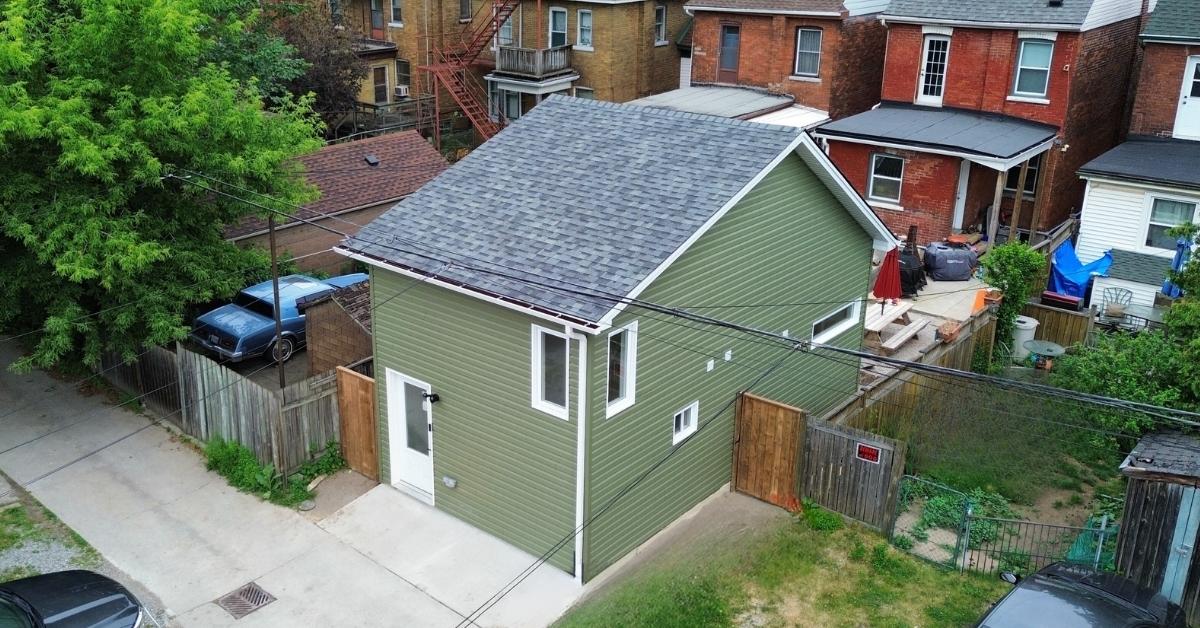
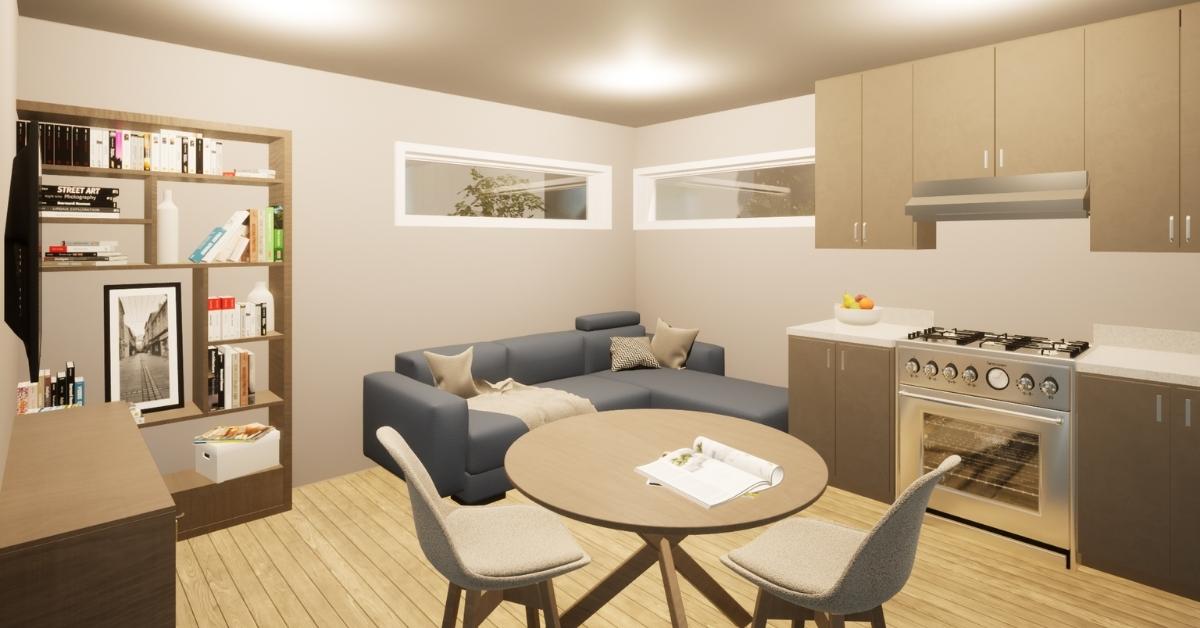
- Detached garden suites require the most work because they’re essentially a small home from the ground up.
The type of unit chosen is the starting point for budget expectations.
2. Existing Home Conditions
Older Ontario homes can hide surprises such as:
- Undersized electrical panels – most homes were build with 100 amp panels or less, new additions require an upgrade to 200 amps to ensure there is enough power supply to your home
- Outdated plumbing – adding new bathrooms and kitchens require larger water and plumbing lines, these will need to be upgraded from the road, and in some cases, on the city side, which requires a larger investment – something many contractors will not identify in initial scopes
- Inadequate insulation
- Poor drainage or foundation moisture – adding more gross floor area to the property means drainage works differently – this must be addressed and is a requirement from the municipality
- Non-compliant prior renovations – we can help you get any non legal addition legalized before we begin work on anything new!
If not identified early, these unknown conditions can cause significant unplanned expenses later in the build. Our initial call and feasibility assessment can help identify most of these unknowns so we can narrow down the costs for you up front.
3. Property Access and Lot Constraints
Lot size, grading, distance to services, and even narrow side yards can impact labour, equipment access, and design decisions, all of which influence costs.
Examples such as –
- Tight urban lots that may require hand-digging instead of machinery
- Long service runs to detached units add utility costs – run go from the house to the ADU and depending on where you hope to build – that can impact your budget. Even needing a second trench!
- Existing trees and drainage patterns may trigger municipal reviews
Understanding these early prevents surprises during construction.
4. Building Code and Fire Separation Requirements
Legal ADUs aren’t just “extra rooms.” They must meet strict requirements for –
- Fire resistance
- Egress
- Soundproofing
- HVAC capacity
- Energy efficiency
- Ceiling heights
- Separate mechanical systems (in some cases)
These code requirements directly shape labour, materials, and design complexity.
5. Municipal Permits and Application Requirements
Each municipality has its own needs – we are able to determine most of this with our initial feasibility assessment.
- Zoning rules
- Lot coverage and height limits
- Parking requirements (often waived, but not always)
- Site plan review triggers
- Engineering demands
- Permit processing timelines
Misinterpreting any of these can result in redesigns, delays, or re submission fees.
Why ADU/ARU Projects Commonly Go Over Budget And How to Avoid It
Many homeowners get informal estimates from contractors, online calculators, or generic square foot pricing, even working with modular homes builders, who leave site work to the homeowner, but ADUs have unique requirements that make these early numbers unreliable. The fragmentation of services, contractors and lack of dedicated project design and management largely explains why it’s often difficult to nail down the answer to how much does it cost to build a legal ADU/ARU in Ontario.
Here are the most common reasons ADU costs exceed expectations:
1. Missing Steps in Early Planning
Typical missed items include
- Site servicing upgrades
- HVAC redesign
- Fire separation
- Drainage solutions
- Electrical service upgrades
- Structural support requirements
- Grading and stormwater considerations
We identify these in our design phase, If they are not identified early, they become mid-project add-ons – big ones.
2. Poor Communication Between Designers, Engineers and Contractors
When separate companies handle design, drawings, permits, and construction, misalignment is common.
This leads to
- Conflicting information
- Change orders
- Redesign fees
- Delays waiting for revised drawings
- Contractor confusion on site
These delays alone often add weeks and thousands of dollars to the project.
3. Drawings That Aren’t Truly “Permit-Ready”
Many homeowners receive drawings that look complete but fail to address all code and municipal requirements.
This can cause
- Permit rejections
- Multiple revision cycles
- Unexpected engineering requirements
- Construction changes due to missing details
Every redesign increases costs.
4. Slow or Incomplete Permit Applications
Submitting an incomplete package or failing to anticipate municipal needs can double the approval time.
This delays construction and increases holding costs, especially for investors.
5. Inaccurate or Overly Optimistic Construction Estimates
Contractors who don’t specialize in ADUs often:
- Underestimate code-required fire separation
- Miss HVAC constraints
- Ignore root systems or grading
- Forget utility capacity limitations
- Assume existing walls/floors are straight and level
These oversights typically show up during construction, when they’re most expensive to fix.
How Suite Builders Prevents These Cost Surprises
Suite Builders was built specifically to address these problems. Four partners – experts in their fields, came together to address these issues – Instead of separating design, engineering, permits, and construction, we combine everything into a single, integrated, ADU-specialized team.
Here’s how that protects your budget:
1. Comprehensive Feasibility Review at the Start
Before we design anything, we assess
- Lot constraints
- Service capacities
- Access requirements
- Zoning & bylaw rules
- Structural feasibility
- Drainage and grading needs
- Municipal requirements
This eliminates surprise costs later.
2. One Team For Design, Permits and Construction
No handoffs. No missing information. No “the designer didn’t tell us.”
Our team works together from day one, ensuring
- Your design is buildable
- Your drawings meet code
- Your permit package is complete
- Your construction budget is accurate
This is the single biggest reason Suite Builders projects stay on-budget.
3. Permit-Ready Drawings Built for Ontario ADUs
Our designers and in-house BCIN professionals specialize in ARUs/ADUs – not general renovations.
We handle:
- Egress
- Fire separation assemblies
- Energy compliance
- Mechanical design
- Structural coordination
- Site plan (for detached units)
The result: faster approvals, fewer revisions, and predictable costs.
4. Transparent, Comprehensive Construction Estimates
Because we design what we build, our estimates account for
- Code-mandated assemblies
- Real-world site conditions
- Material and labour availability
- Long-term maintenance considerations
No vague allowances. No unrealistic “starting at” pricing.
5. A Predictable, Managed Process
From concept to permits to final inspection, Suite Builders manages every step so you don’t have to.
That means
- No chasing trades
- No unclear scope
- No permit confusion
- No budget-derailing surprises
Just a clear path from idea to finished, legal home.
So…how much does it cost to build a legal ADU/ARU in Ontario?
Now that the major factors and risks are clear, here is the realistic answer to the question: how much does it cost to build a legal ADU/ARU in Ontario?
- How much does a finished basement apartment cost in Ontario? $100,000–$200,000 +/-
- How much is it to convert my garage into an apartment in Ontario? $125,000–$290,000 +/- (1 story vs two story)
- How much to build an addition on my house for a legal suite? $220,000–$320,000 +/-
- How much is it to build a tiny home or garden suite in Ontario? $200,000–$350,000+
Every project begins with a Free Feasibility Call to determine exactly what your property can support and what your budget should be.
This ensures you move forward with clarity, not guesswork.
Ready to Explore an ADU on Your Property?
Suite Builders helps Ontario homeowners and investors build legal, beautiful, and long-lasting ADUs with a stress-free, fully integrated process. Click here to book a free initial feasibility call to begin the process today!